
Table of Contents
- Smartphone Camera Kit vs Dedicated Camera: The Core Tradeoff
- Sensor Size, Light Sensitivity, and Image Quality
- How to Improve Smartphone Photography Quality
- Best Smartphone Photography Accessories for Better Results
- Ergonomics, Handling, and Workflow Efficiency
- Battery Life, Portability, and Travel Convenience
- Real-World Use Cases: When Each One Wins
- Conclusion
Last Updated: August 24, 2026
Smartphone Camera Kit vs Dedicated Camera: The Core Tradeoff
The smartphone camera kit vs dedicated camera debate isn't really about which one is "better", it's about which tool matches your actual workflow. At Gear Up & Go, the answer almost always depends on what you're trying to accomplish and how much friction you're willing to tolerate.
Here's the tension: smartphones have become genuinely impressive at computational photography. They process light in ways that would have required hours in post-processing five years ago. But dedicated cameras still dominate when you need manual control, optical zoom without quality loss, or the ability to work in extreme conditions. The real question isn't which technology is superior, it's which limitation you can actually live with.
The smartphone camera kit vs dedicated camera choice comes down to three core factors: the physics of sensor size, the workflow you actually use, and whether you're optimizing for convenience or control. We'll walk you through each, then show you exactly when to pick one over the other.
Sensor Size, Light Sensitivity, and Image Quality
The fundamental difference between a smartphone camera and a dedicated camera comes down to physics: sensor size determines how much light hits each pixel, which directly affects image quality in low light and your ability to achieve shallow depth of field and bokeh effects.
A typical smartphone sensor measures around 1/1.3 inches. A full-frame dedicated camera sensor is 36×24mm (iso.org). That's roughly 30 times larger in surface area. More sensor real estate means each pixel receives more light, which means better low-light performance, higher dynamic range, and cleaner images at higher ISO settings without visible noise.
In practical terms: a smartphone shot at ISO 3200 in a dimly lit restaurant will show visible grain. The same scene on a dedicated camera with a quality lens produces a clean, usable image. This gap closes indoors under good lighting, but it never fully closes in challenging conditions.
Smartphone manufacturers compensate with computational photography, they stack multiple exposures, apply intelligent noise reduction, and use AI to reconstruct detail. The results are genuinely impressive for social media and casual viewing. But if you're printing at A4 size or larger, or if you need to grade footage heavily in post-processing, the underlying sensor limitations become obvious.
Here's where it gets interesting: dedicated cameras give you RAW files, which preserve all the sensor data and let you recover detail in shadows and highlights during post-processing. Smartphones typically offer only JPEG or limited RAW capture. This matters enormously if you shoot in mixed lighting or need maximum flexibility in the edit.
How to Improve Smartphone Photography Quality
If you're committed to smartphone photography, the single biggest improvement comes from understanding that your phone's computational engine is already doing most of the heavy lifting. Your job is to give it good input, proper framing, adequate light, and stable composition.
Start with stabilization. Camera shake is the enemy of smartphone photos, especially in lower light where the sensor needs longer exposure times. A tripod or stabilizing mount transforms what your phone can capture. The Gear Up & Go 11-in-1 smartphone lens kit includes mounting solutions that keep your device steady without adding bulk to your bag. Stability alone improves sharpness more than any software adjustment.
Next, manage light deliberately. Smartphones struggle with backlit subjects and high-contrast scenes. Position yourself so light comes from the side or front. Use reflectors to bounce light into shadow areas. Avoid pointing directly into the sun unless you're specifically going for lens flare. Your phone's computational photography works best when it has balanced light to work with, it can't recover detail that was never captured.
Computational Photography vs Raw Optical Performance
This is the divide that determines whether smartphone photography will satisfy you long-term. Computational photography uses machine learning to enhance images after capture, it merges multiple exposures, applies selective sharpening, adjusts colors intelligently, and fills in detail. It's genuinely clever technology.
But it's also a black box. You don't control how aggressively the phone applies these effects. You can't disable them if they produce artifacts. You can't choose to preserve grain for aesthetic reasons or push colors in a specific direction. Dedicated cameras give you RAW files and manual exposure controls, you decide what happens during post-processing.
For content creators and photographers who want creative control, this is the critical difference. A dedicated camera with manual controls lets you shoot with intention. You set aperture to control depth of field, adjust shutter speed for motion, and choose ISO based on your needs. You then process the RAW file exactly as you envision it.
Smartphones excel at "point and shoot, looks great instantly." Dedicated cameras excel at "I have a specific creative vision and need the tools to execute it." If your workflow is the former, smartphones win. If it's the latter, a dedicated camera is nearly essential.
Best Smartphone Photography Accessories for Better Results
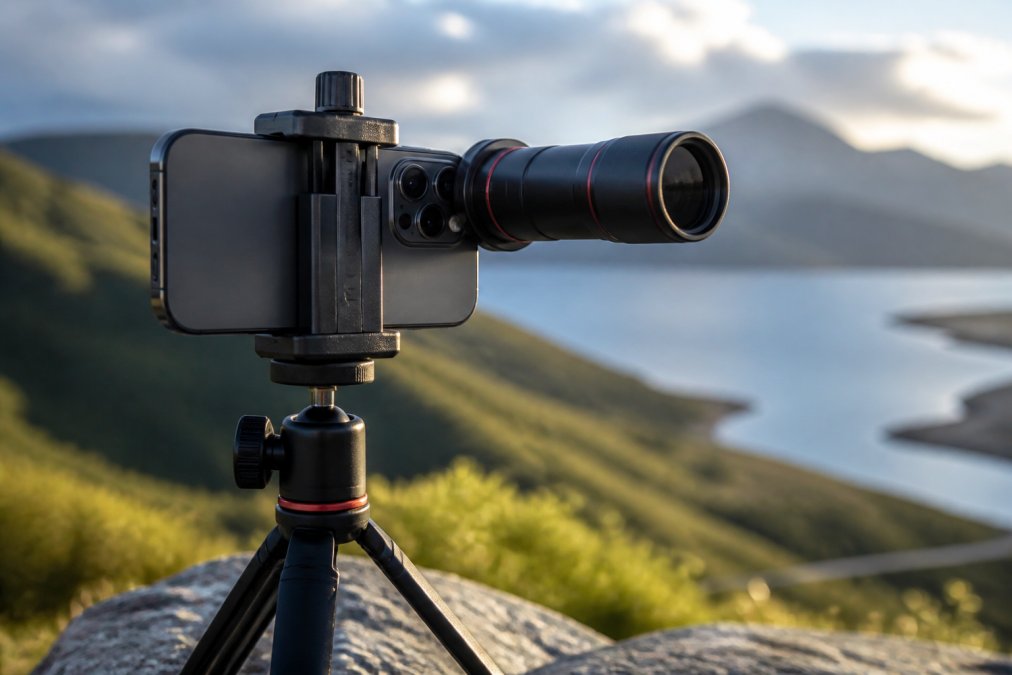
The accessories that actually improve smartphone photography fall into three categories: stabilization, optics, and lighting. Most gimmick accessories fall into none of these categories.
Stabilization accessories include tripods, gimbals, and mounting rigs. A basic tripod costs minimal money and solves 60% of smartphone photography problems by eliminating camera shake. If you're shooting video or doing long exposures, a gimbal or stabilizer becomes essential. Gear Up & Go offers mounting solutions that integrate with professional tripod systems, so you're not locked into smartphone-specific gear.
External lenses expand what your phone can capture. A quality wide-angle lens lets you shoot broader scenes. A telephoto lens provides optical zoom without the quality loss that digital zoom introduces. A macro lens enables close-up detail work. The key word is "quality", cheap plastic lens kits produce soft, distorted images. Invest in glass if you go this route.
Lighting accessories include reflectors, diffusers, and LED panels. A simple white reflector bounces light into shadow areas and costs almost nothing. A diffuser softens harsh sunlight. A portable LED panel lets you add light in dim environments. These accessories don't require batteries or complex setup, they directly solve the fundamental smartphone weakness in challenging light.
Ergonomics, Handling, and Workflow Efficiency
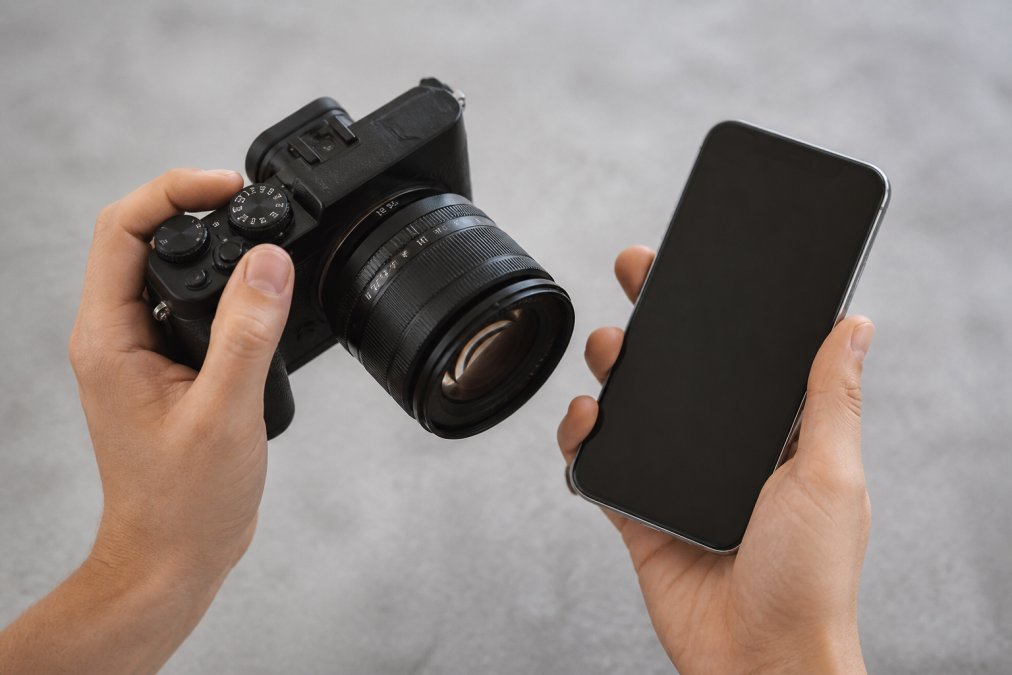
Here's where the smartphone camera kit vs dedicated camera choice becomes visceral: how the tool feels in your hand and how quickly you can adjust settings.
A smartphone is inherently small and light. You can shoot one-handed. You can carry it everywhere without thinking about it. But this compactness comes with tradeoffs. Your fingers cover the lens. There's no dedicated zoom ring or aperture dial, you tap the screen, which is slower than physical controls and takes your eye off the composition. The small screen makes it hard to judge focus and exposure in bright sunlight. Battery life is measured in hours, not days.
A dedicated camera, especially a mirrorless design, feels substantial in your hand. There's a proper grip. Dedicated physical controls let you adjust aperture, shutter speed, and ISO without looking away from the viewfinder. The optical viewfinder (or high-quality electronic viewfinder) shows you exactly what the sensor sees, with no lag. Interchangeable lenses mean you can optimize for different focal lengths without compromise.
The workflow efficiency difference is real. On a smartphone, shooting in manual mode requires tapping through menus. On a dedicated camera, you twist a dial. When you're trying to capture a fleeting moment, wildlife, action sports, street photography, the camera that lets you adjust fastest wins.
Battery Life, Portability, and Travel Convenience
Smartphone cameras win decisively on portability. Your phone is already in your pocket. No additional gear required. You can shoot hundreds of photos before battery depletion becomes a concern (though video drains batteries faster). For casual travel and everyday moments, this is genuinely hard to beat.
Dedicated cameras require more planning. You need to carry the camera body, at least one lens, a battery, and a charger. A quality camera bag adds another pound or two. Setup time is longer, you mount the lens, compose, adjust settings. It's not spontaneous.
But here's the practical reality: dedicated camera batteries last 400-800 shots per charge depending on the model (cipa.jp). A smartphone battery lasts maybe 100-150 photos before you're thinking about power (peer-reviewed research). If you're on a full day of hiking or travel, the dedicated camera actually outlasts your phone. And if your phone dies, you lose your primary communication device, not just your camera.
The portability advantage of smartphones narrows considerably once you add smartphone photography accessories. A tripod, external lenses, and lighting gear take up space and weight. You're no longer traveling with "just your phone." You're traveling with a smartphone photography kit that occupies more space than a dedicated mirrorless camera and single lens.
For true minimalist travel where you want zero dedicated gear, smartphones win. For any trip longer than a few hours where photography is a priority, a dedicated camera becomes competitive on practicality.
Real-World Use Cases: When Each One Wins
The smartphone camera kit vs dedicated camera choice becomes clear once you define your actual use case.
Smartphones win for:
- Social media content (Instagram, TikTok, stories)
- Casual family moments and travel snapshots
- Situations where you need to travel light and unencumbered
- Quick documentation and everyday reference photos
- Video content where stabilization and audio sync matter more than optical quality
- Situations where you can't predict whether you'll need a camera (you always have your phone)
Dedicated cameras win for:
- Professional photography and client work
- Situations requiring manual exposure control and RAW post-processing
- Low-light environments (events, concerts, night scenes)
- Wildlife and sports photography where optical zoom and autofocus speed matter
- Printing large (A3 and above)
- Video work requiring external audio, color grading, and high bitrate recording
- Situations where you're deliberately choosing to create, not just document
The practical reality: many photographers use both. They carry a dedicated camera when photography is the primary purpose of the trip, and rely on their smartphone for everything else. This hybrid approach gives you the best of both worlds, the creative control and optical performance of a dedicated camera when it matters, plus the convenience of a smartphone for everyday moments.
At Gear Up & Go, we support both approaches. Our smartphone photography kits enhance what your phone can do without requiring you to commit to a full camera system. And for photographers who do carry dedicated cameras, we offer mounting solutions, charging accessories, and organizational gear that make the workflow smoother.
The smartphone camera kit vs dedicated camera debate will continue as long as both technologies exist. But the real answer is simple: pick the tool that matches your workflow and your creative ambitions. If you're making content for social platforms and want zero friction, a smartphone with quality accessories is genuinely sufficient. If you're building a portfolio, printing your work, or need creative control in challenging conditions, a dedicated camera is worth the investment. Most photographers benefit from understanding both, and knowing when to reach for each one.
=== FAQ ANSWERS (audit these too, same rules) ===
[1] Q: Should I buy a dedicated camera or just use my smartphone camera kit? A: It depends on your priorities. A smartphone camera kit excels for casual shooting, social media, and travel because it's always with you and computational photography delivers sharp, vibrant images instantly. A dedicated camera wins if you need manual controls, work with RAW files for post-processing, shoot in low light regularly, or require optical zoom and interchangeable lenses. Professional photographers and serious hobbyists typically use dedicated cameras; casual creators and travelers often find smartphone kits sufficient.
[2] Q: Can a smartphone camera kit replicate the quality of a mirrorless camera? A: Smartphone kits can produce impressive results, especially in good light, thanks to computational photography that processes images in real-time. However, they cannot match a mirrorless camera's sensor size, dynamic range, or low-light performance. Dedicated cameras offer superior optical zoom without quality loss, better ergonomic grip for extended shooting, and full manual exposure control. For print quality beyond A4 size or professional workflows requiring RAW files, a mirrorless camera remains superior.
[3] Q: What are the best smartphone photography accessories to improve image quality? A: External lens kits (wide-angle, macro, telephoto) expand your creative range beyond your phone's fixed focal length. Tripods and gimbals stabilize shots and enable long exposures. Lighting accessories like portable LED panels improve low-light performance. A quality phone case with lens protection prevents damage. Filters (ND, polarizing) offer optical control. Editing software with RAW support unlocks post-processing potential. The most impactful upgrade is often a tripod or stabilizer, which immediately improves sharpness and composition consistency.
[4] Q: Which is better for travel photography: a smartphone kit or a dedicated camera? A: Smartphone kits win for travel convenience because they eliminate the need for extra gear, batteries, and lenses. You're always ready to shoot without bulky equipment. Dedicated cameras suit serious travel photographers who want optical zoom, low-light capability, and the ability to shoot RAW for post-processing flexibility. The choice hinges on whether you prioritize portability and ease (smartphone) or image quality and creative control (dedicated camera). Many travelers use both: a smartphone for everyday moments and a compact mirrorless camera for intentional photography.
Frequently Asked Questions
Q: Should I buy a dedicated camera or just use my smartphone camera kit?
A: It depends on your priorities. A smartphone camera kit excels for casual shooting, social media, and travel because it's always with you and computational photography delivers sharp, vibrant images instantly. A dedicated camera wins if you need manual controls, work with RAW files for post-processing, shoot in low light regularly, or require optical zoom and interchangeable lenses. Professional photographers and serious hobbyists typically use dedicated cameras; casual creators and travelers often find smartphone kits sufficient.
Q: Can a smartphone camera kit replicate the quality of a mirrorless camera?
A: Smartphone kits can produce impressive results, especially in good light, thanks to computational photography that processes images in real-time. However, they cannot match a mirrorless camera's sensor size, dynamic range, or low-light performance. Dedicated cameras offer superior optical zoom without quality loss, better ergonomic grip for extended shooting, and full manual exposure control. For print quality beyond A4 size or professional workflows requiring RAW files, a mirrorless camera remains superior.
Q: What are the best smartphone photography accessories to improve image quality?
A: External lens kits (wide-angle, macro, telephoto) expand your creative range beyond your phone's fixed focal length. Tripods and gimbals stabilize shots and enable long exposures. Lighting accessories like portable LED panels improve low-light performance. A quality phone case with lens protection prevents damage. Filters (ND, polarizing) offer optical control. Editing software with RAW support unlocks post-processing potential. The most impactful upgrade is often a tripod or stabilizer, which immediately improves sharpness and composition consistency.
Q: Which is better for travel photography: a smartphone kit or a dedicated camera?
A: Smartphone kits win for travel convenience because they eliminate the need for extra gear, batteries, and lenses. You're always ready to shoot without bulky equipment. Dedicated cameras suit serious travel photographers who want optical zoom, low-light capability, and the ability to shoot RAW for post-processing flexibility. The choice hinges on whether you prioritize portability and ease (smartphone) or image quality and creative control (dedicated camera). Many travelers use both: a smartphone for everyday moments and a compact mirrorless camera for intentional photography.
This article was written using GrandRanker